
Central Florida Fall Birding Guide
Looking for the best birding spots in Central Florida this fall? Whether you're a seasoned birder or a passionate bird photographer, Cedar Lakes Woods and Gardens offers a vibrant environment for spotting both resident and migrating bird species this time of year.
Located in the heart of North Central Florida just outside Williston, our unique blend of forested trails, botanical gardens, limestone cliffs, and tranquil ponds provides a diverse ecosystem that attracts a wide range of birds. Many of these species can also be found throughout Central Florida, making the guide useful for birdwatching in surrounding areas as well. Cedar Lakes is an ideal destination for fall birdwatching in Florida, with excellent opportunities to observe and photograph birds in a truly unique setting.
Bird Species Spotted in Fall
Our staff and visitors record bird sightings at Cedar Lakes Woods and Gardens using tools like Cornell Lab's eBird app. We’ve gathered these sightings and put together a list some of the year-round and seasonal species you might encounter during your fall visit:
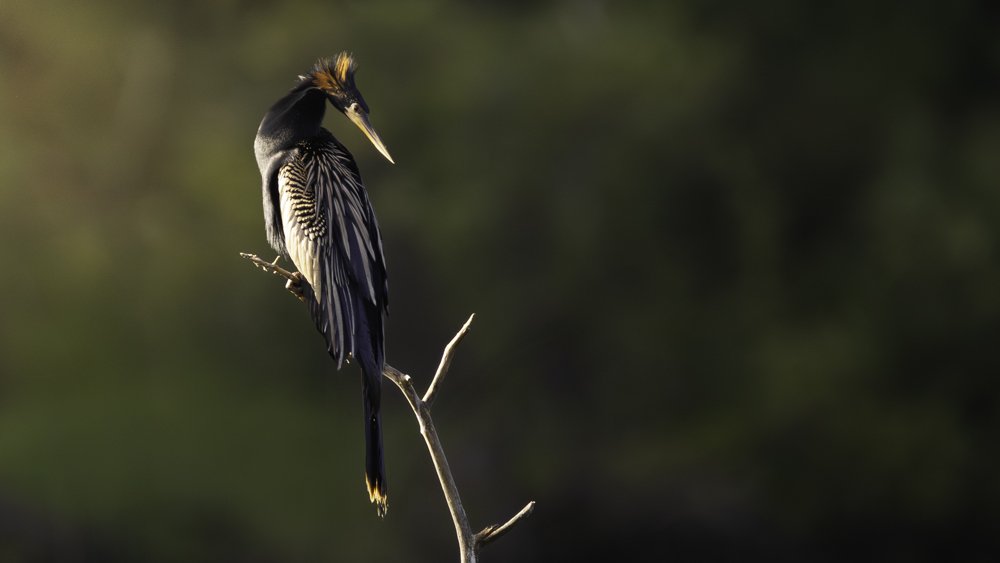
Photo Credit: Stefan Marinak
Anhinga
The anhinga, often called the “snake bird” for the way its long neck curves above the water, is a year-round resident of Florida. These birds are often spotted in the two lakes near our entrance, perched on branches with wings spread wide as they dry their feathers. With a quick thrust of their sharp beak, they spear fish and other aquatic prey before surfacing to flip their catch into their mouths.
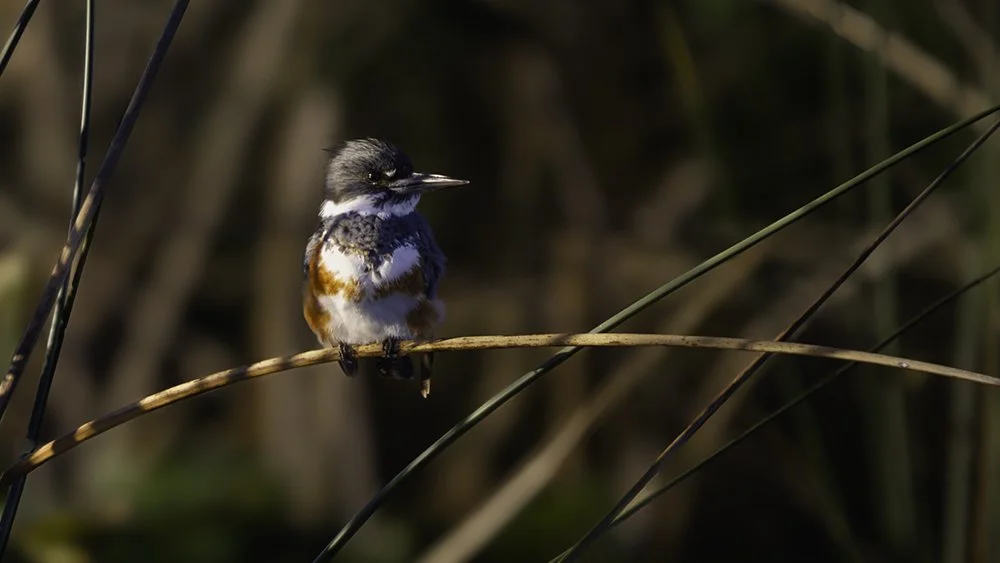
Photo Credit: Stefan Marinak
Belted Kingfisher
This stocky, medium-sized bird is easy to recognize by its large crested head, long pointed bill, and striking blue-gray plumage with a bold blue breast band. Unusually for birds, the female is more colorful than the male with an extra rusty band across the belly. Belted Kingfishers are solitary hunters that can often seen perched quietly above the water before plunging headfirst to catch fish and other aquatic prey. Their loud, rattling calls are another giveaway of their presence as they patrol their territory along lakes, ponds, and rivers. Keep an eye out for this somewhat elusive bird near the water’s edge at the lakes.
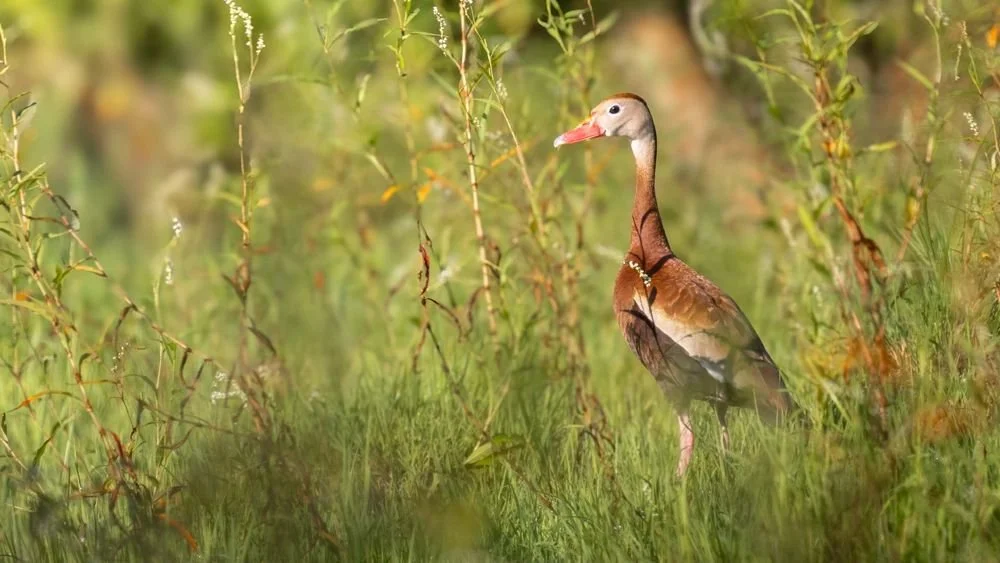
Photo credit: Stefan Marinak
Black-Bellied Whistling Duck
Black-bellied whistling ducks are a favorite sight across Central and South Florida in late summer and early fall, often mingling with flocks of fulvous whistling ducks. They’ve established themselves as year-round residents throughout the peninsula, and it’s common to see them flying and gathered around our lakes or in the ponds within our conservation area.
“Black-throated Blue Warbler (Setophaga caerulescens)” by Andrew Cannizzaro, CC BY 2.0
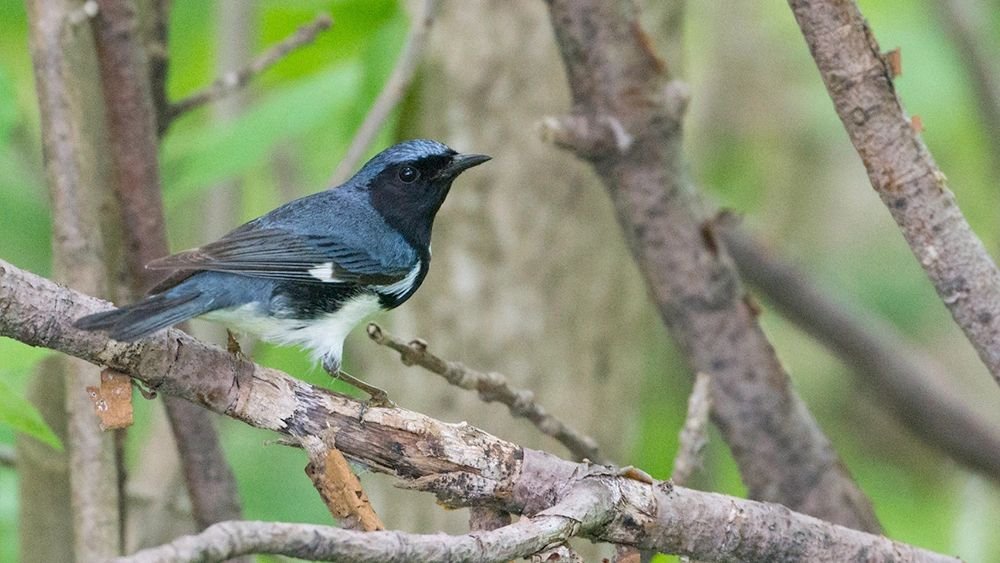
Black-Throated Blue Warbler
Black-throated Blue Warblers are most often seen in Florida during spring and fall migration. You can find them flitting through the treetops as they travel between their northern breeding grounds and wintering sites in the Caribbean. A small number also spend the winter in South Florida. Males are striking with their black faces, blue backs, and white underparts, while females are olive-brown above and buff below. Both sexes share a distinctive white wing patch that helps with identification.
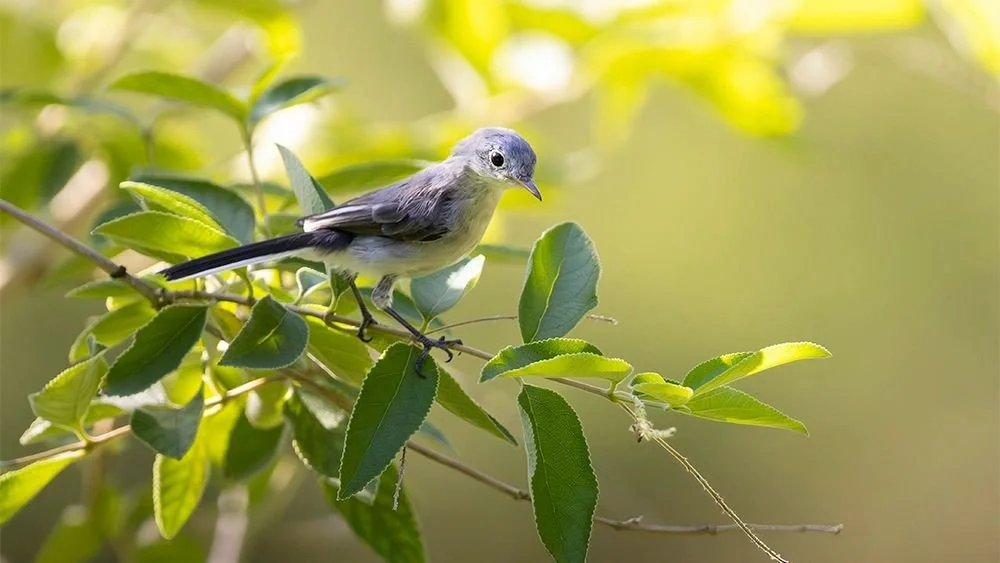
Photo Credit: Stefan Marinak
Blue-Gray Gnatcatcher
The blue-gray gnatcatcher may be tiny, but it’s one of the most energetic birds you’ll encounter at Cedar Lakes. These quick little songbirds are year-round residents in Florida, and can usually be spotted flitting through our bird house field or darting among the trees in the orchard gardens. With their soft blue-gray backs, white bellies, and distinctive white eye-rings, they’re easy to recognize once you catch sight of their constant motion.
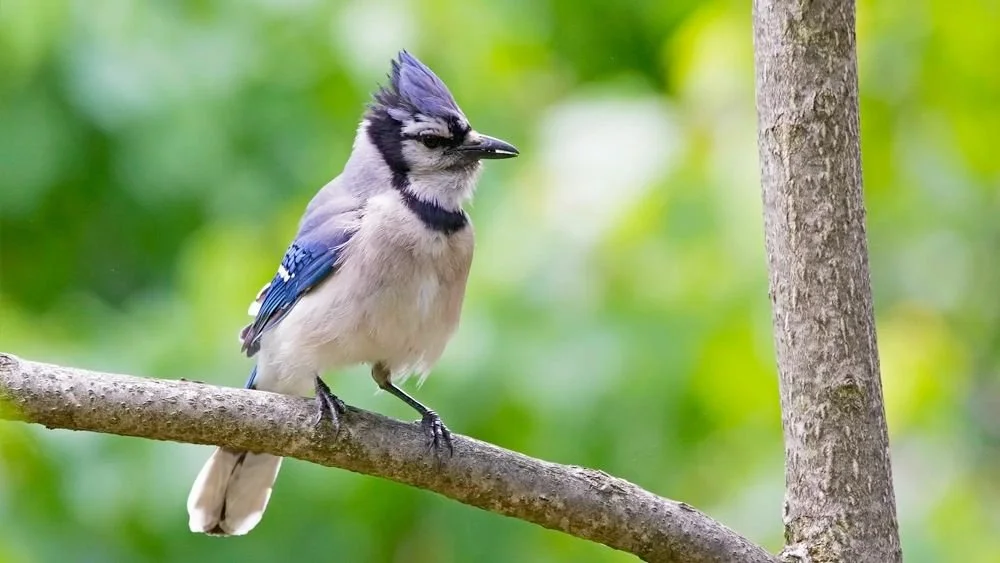
Photo Credit: Mathew Schwartz
Blue Jay
Bold, loud, and unmistakable, the blue jay is one of the most recognizable birds in Central Florida. At Cedar Lakes, they’re often seen swooping through the bird house field chasing other birds away from food, or perched high in the trees along the park’s edges. Their striking blue, black, and white feathers, topped with a prominent crest, make them stand out in any setting. Known for their raucous “jay” calls and even their uncanny imitations of hawks, blue jays bring a burst of energy to the landscape.
“Cape May Warbler” by Andy Reago & Chrissy McClarren, CC BY 2.0
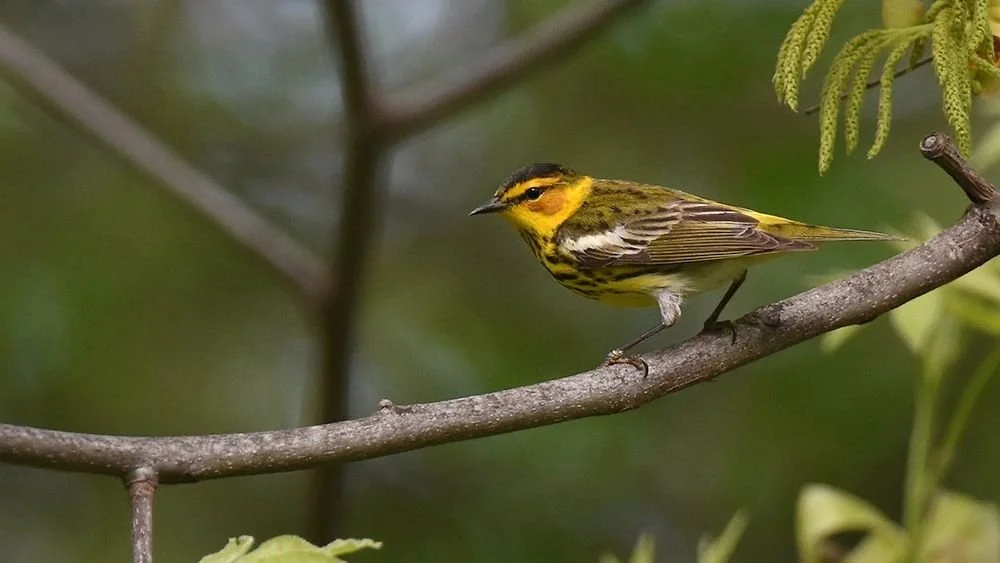
Cape May Warbler
Cape May Warblers are most often seen in Florida during spring and fall migration. They typically stay high in the treetops but sometimes drop down to feast on mulberries after long flights, often leaving little red berry stains on their chins. They breed in the northern boreal forests and spend winters in the West Indies, passing through Florida along the way.
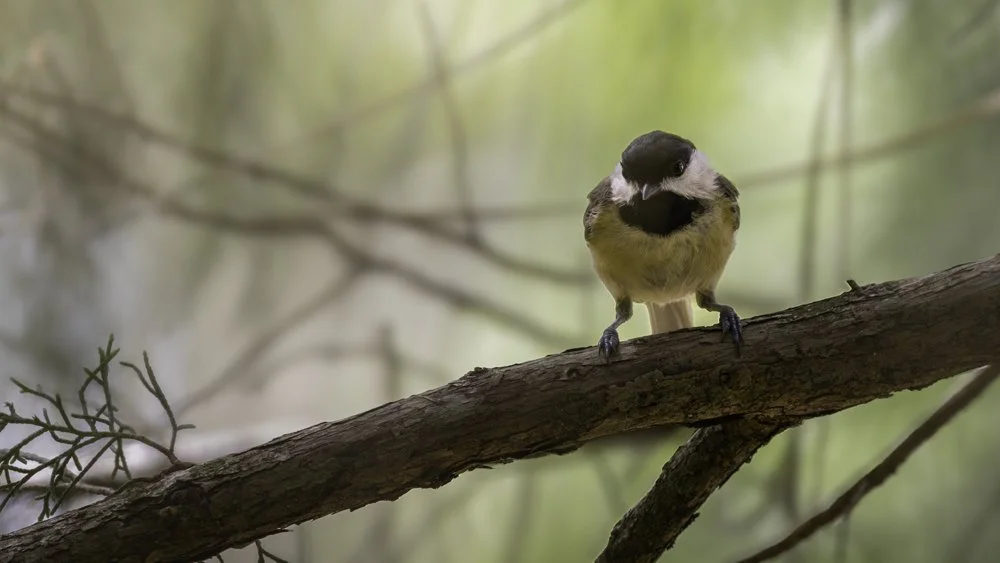
Photo Credit: Stefan Marinak
Carolina Chickadee
Small but full of personality, the Carolina chickadee is a year-round resident at Cedar Lakes Woods and Gardens. You’ll often see them near the front office, hopping energetically from branch to branch and filling the air with their lively calls. With their bold black-and-white heads and cheerful songs, these little birds are easy to spot once you tune into their constant activity. Despite their size, chickadees are known for their strong presence and clever nesting habits, often making use of old woodpecker holes to raise their young. Their playful energy makes them a delight to watch in the garden.
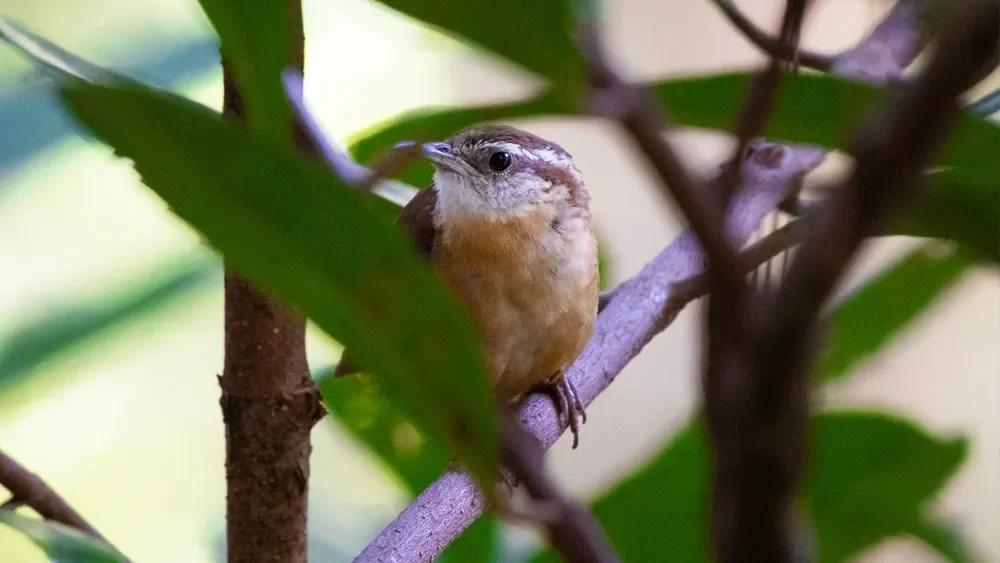
Photo Credit: Stefan Marinak
Carolina Wren
The Carolina wren is a small bird with a big voice, and its song is one of the most cheerful sounds you’ll hear in the gardens. At Cedar Lakes, they’re often spotted darting through the wooded areas, weaving low through brush and tangles of vines as they search for insects and fruit. Carolina Wrens in Florida boast a warm chestnut coloring, a bold white eyebrow stripe, and a tail often cocked upward, they’re easy to recognize once you catch them in motion.
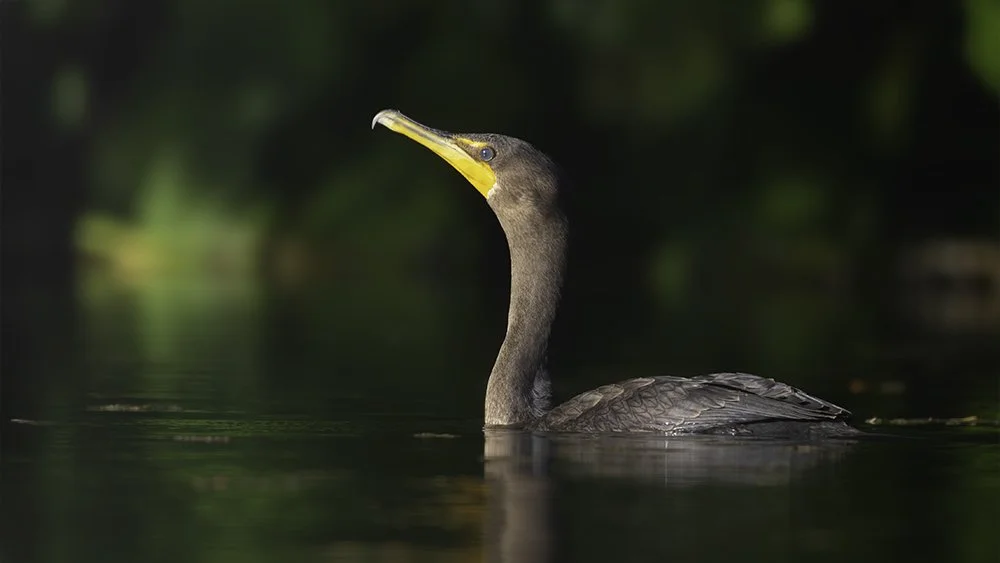
Photo Credit: Stefan Marinak
Double Crested Cormorant
The Double-crested Cormorant is a sleek, dark waterbird often seen gliding across the lakes or perched along the shoreline with its wings spread wide to dry. At Cedar Lakes, they’re frequently spotted on the two lakes near the entrance, diving gracefully beneath the surface in search of fish. With their long, hooked bills, orange-yellow facial skin, and striking turquoise eyes, these cormorants are unmistakable once you notice them. They are one of the park’s most dramatic silhouettes.
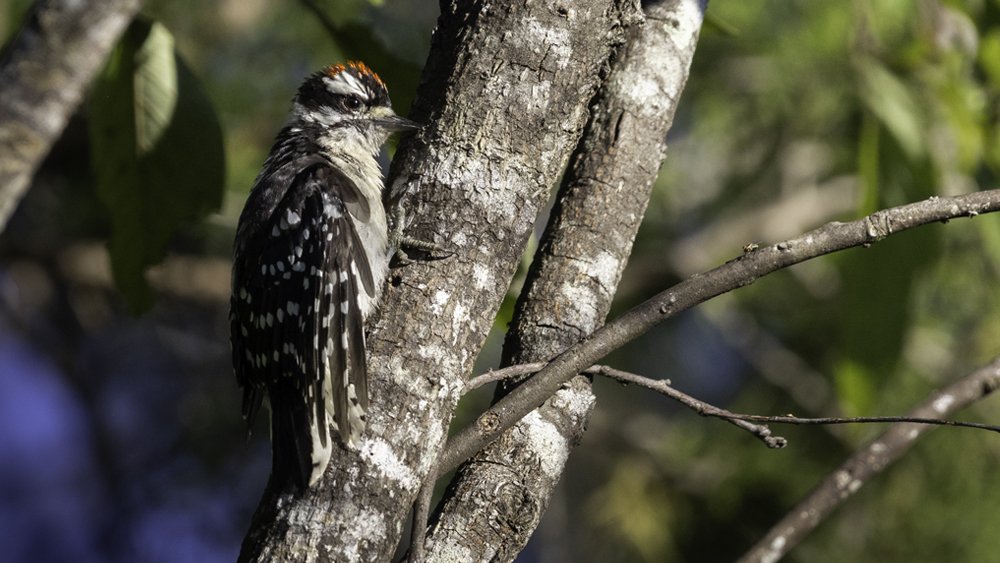
Photo Credit: Stefan Marinak
Downy Woodpecker
The Downy Woodpecker is the smallest woodpecker in North America, but don’t let its size fool you, it’s a lively little bird with plenty of energy. At Cedar Lakes, they’re most often found high up in the trees, tapping away at bark in search of insects. With their crisp black-and-white plumage and a short, chisel-like bill, Downy Woodpeckers are easy to spot once you catch them moving along a trunk or branch. They’re frequently mistaken for their lookalike cousin, the hairy woodpecker, but downies are smaller in size and have a shorter bill.
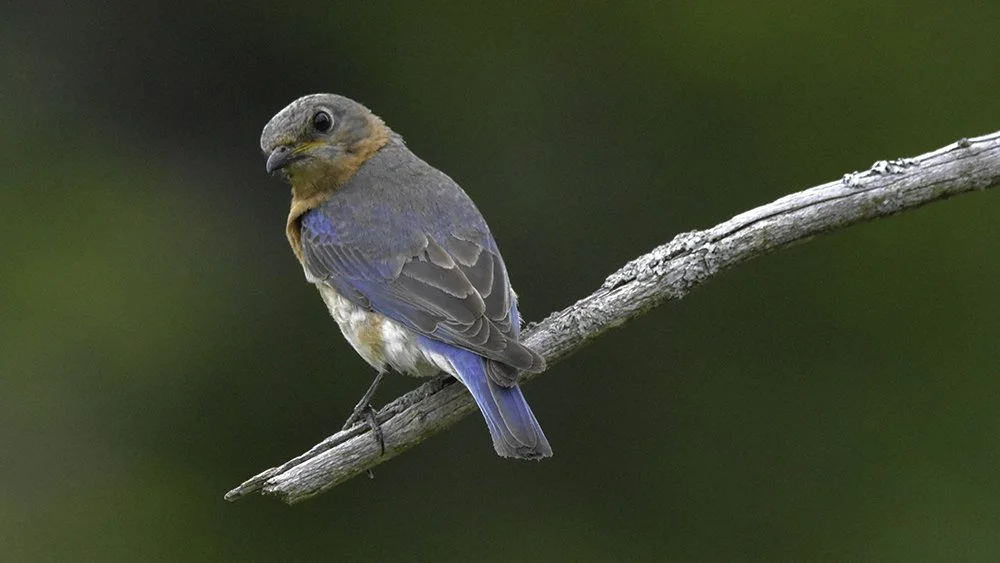
Photo Credit: Jack Bulmer
Eastern Bluebird
The Eastern Bluebird is a flash of color in the trees and pastures, though they’re not as easy to spot around the gardens as the more common chickadees, tufted titmice, nuthatches, and Carolina wrens. Males wear a vibrant blue back, head, and tail with a rusty red breast and throat, while females are softer in color, with grayish-blue wings and a muted orange wash across the chest. Young bluebirds look quite different, heavily spotted as they grow into their adult colors. Bluebirds nest in tree cavities but must compete fiercely with other native birds for these limited spaces. At Cedar Lakes, our nest boxes helps give them a boost, since natural cavities are hard to come by.
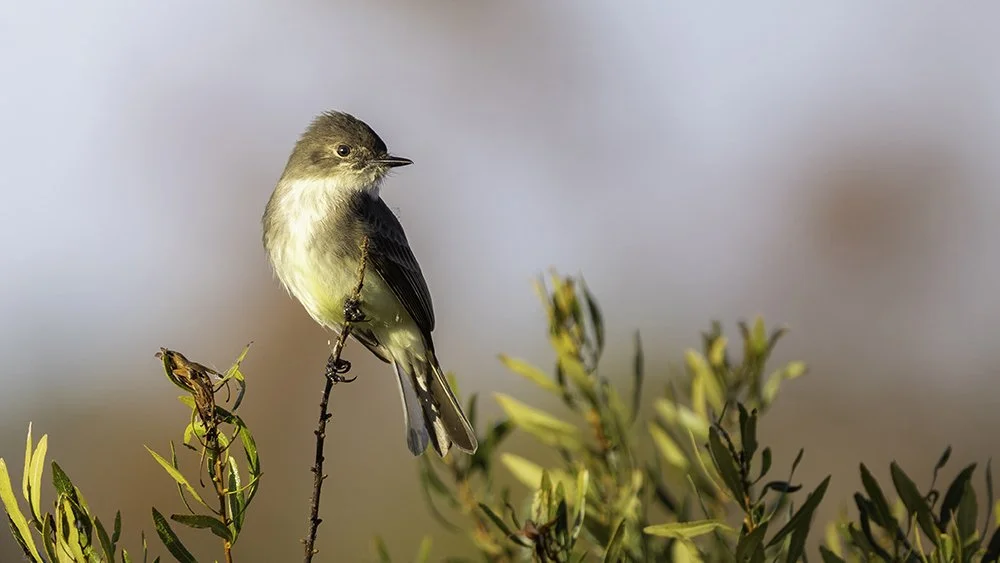
Photo Credit: Stefan Marinak
Eastern Phoebe
The Eastern Phoebe is a small, brownish-gray flycatcher that spends the fall and winter months in Florida during their non breeding season. At Cedar Lakes, they’re often seen perched in open areas, wagging their tails and darting out to catch insects before returning to the same spot. In their fall plumage, they may show a faint yellow wash on the belly with pale edging on the wings. These birds add a lively presence to the park’s cooler months.
“Gray-cheeked Thrush” by Andy Reago & Chrissy McClarren, CC BY 2.0
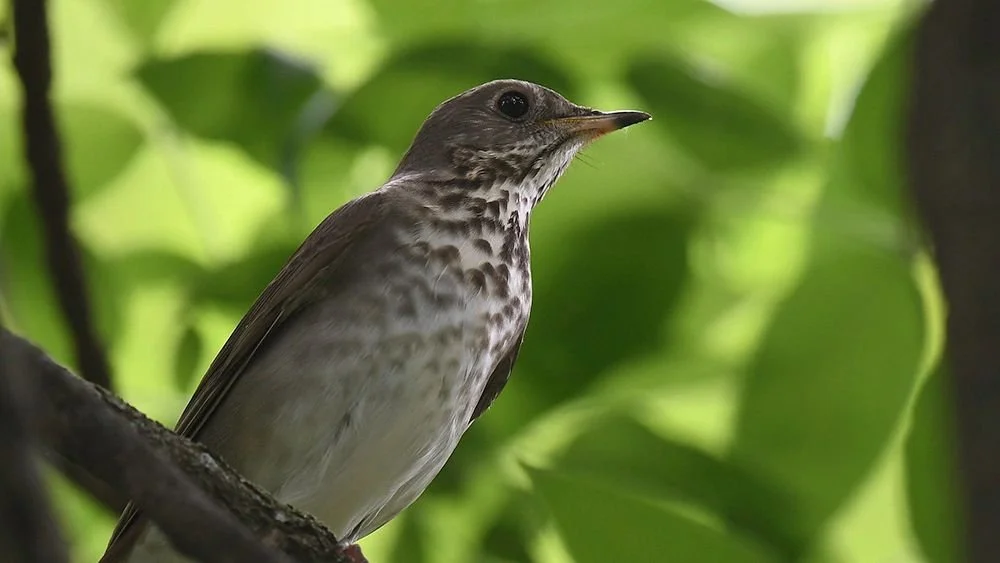
Gray-cheeked Thrush
Gray-cheeked Thrushes are shy migrants that pass through Florida mainly in spring (late April-May) and fall (October). The best chance to spot them is in the wooded areas around the gardens and lakes, where they slip quickly through dense undergrowth. They are often tricky to see, but you can recognize them by their plain gray cheeks, dull brown back, and faint, incomplete eye-ring, lacking the warmer tones or bold markings of similar thrushes.
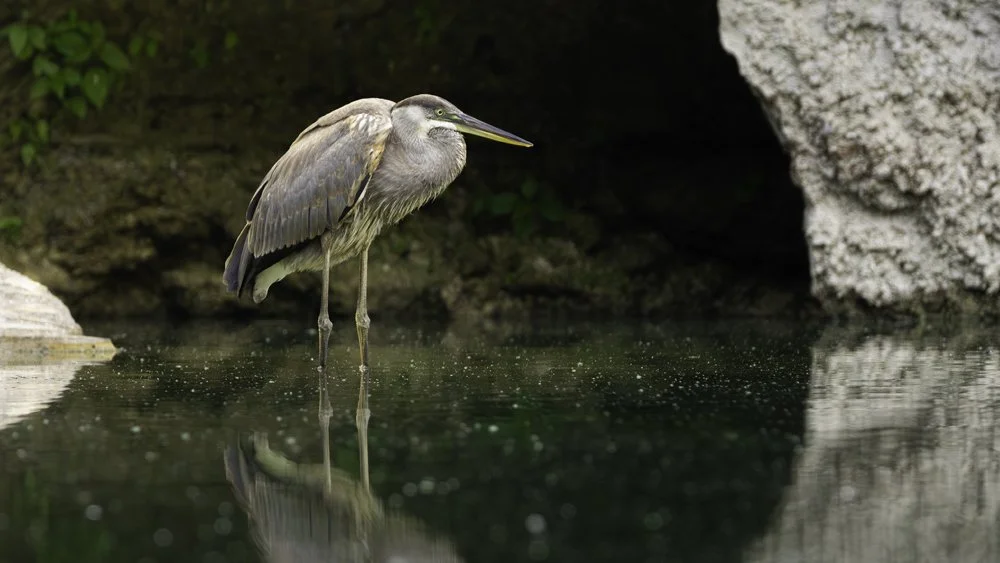
Photo Credit: Stefan Marinak
Great Blue Heron
The Great Blue Heron is a tall, elegant wader often seen stalking the waters of our two lakes and sometimes the central pond. With its long legs, sharp bill, and striking blue-gray plumage, it moves slowly and deliberately while hunting for fish. Their slow, patient stance and graceful strikes make them easy to spot and photograph as they glide or stand motionless along the water’s edge.
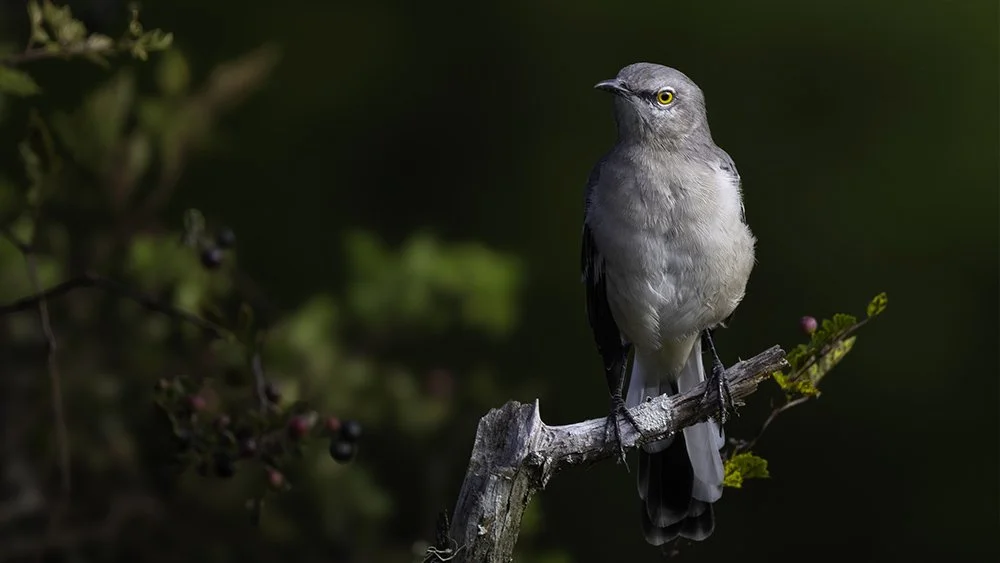
Photo Credit: Stefan Marinak
Northern Mockingbird
The Northern Mockingbird, Florida’s official state bird, is one of the most familiar sights at Cedar Lakes, especially near the park entrance where they are often seen perched in the trees. These year-round residents are medium-sized, gray birds with slender builds and distinctive white patches on their wings and tails, which they flash in flight or when displaying. Mockingbirds can mimic up to 200 songs and sounds, from other birds to mechanical noises. They thrive in parks, open lawns, and suburban areas where they feed on insects and fruit, and they are highly territorial.
“Fourth spring warbler (of spring)” by Andrew Weitzel, CC BY-SA 2.0
Northern Waterthrush
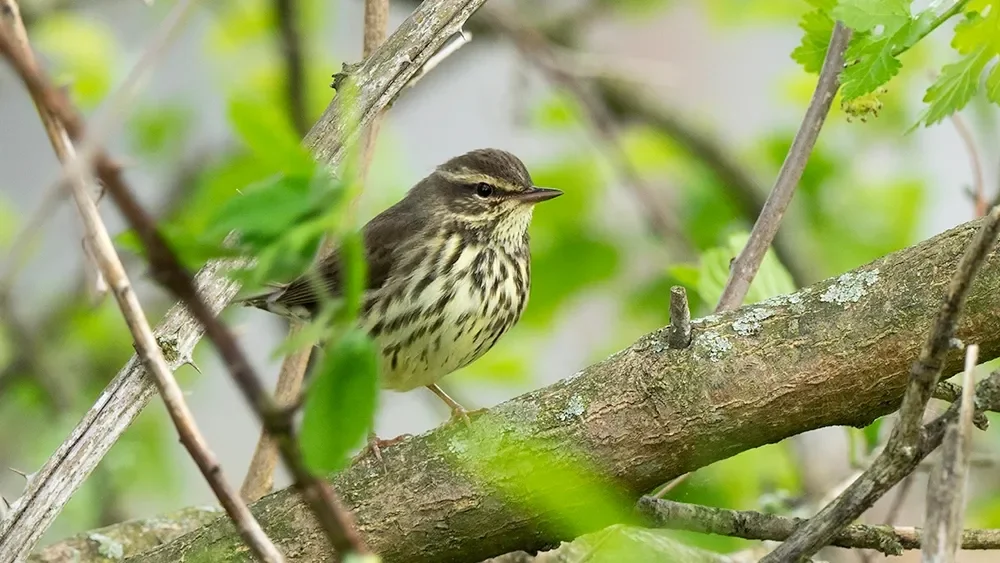
The Northern Waterthrush is a small, energetic warbler most often seen in Florida during spring and fall migration. At Cedar Lakes, look for them along the edges of the ponds and lakes, where they forage in shallow water and wet leaf litter. Easily identified by their brown backs, heavily streaked white underparts, pale yellow “eyebrow,” and constant tail-bobbing motion, these little birds are always on the move as they hunt for insects and other invertebrates.
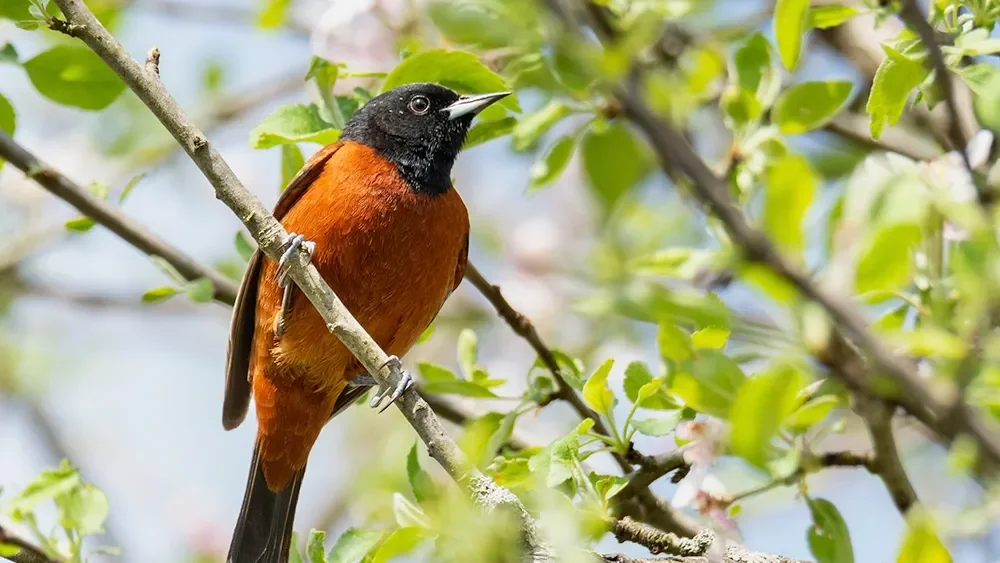
Photo Credit: Wayne National Forest
Orchard Oriole
The Orchard Oriole is a small, colorful songbird that can sometimes breed in the Cedar Lakes area but is most often seen in Florida during spring and fall migration as they travel between their breeding grounds and wintering areas in Mexico, Central America, and northern South America. They favor open wooded habitats near water, especially live oaks, and can occasionally be spotted nesting in tall trees where their hanging nests are easier to see after leaves drop. Male and female Orchard Orioles look quite different. The adult male has a bold black head, throat, back, and wings with a rich chestnut-red belly and rump, making him striking and easy to spot. The female is a softer yellow-green overall with dusky wings and faint wing bars, blending more easily into foliage.
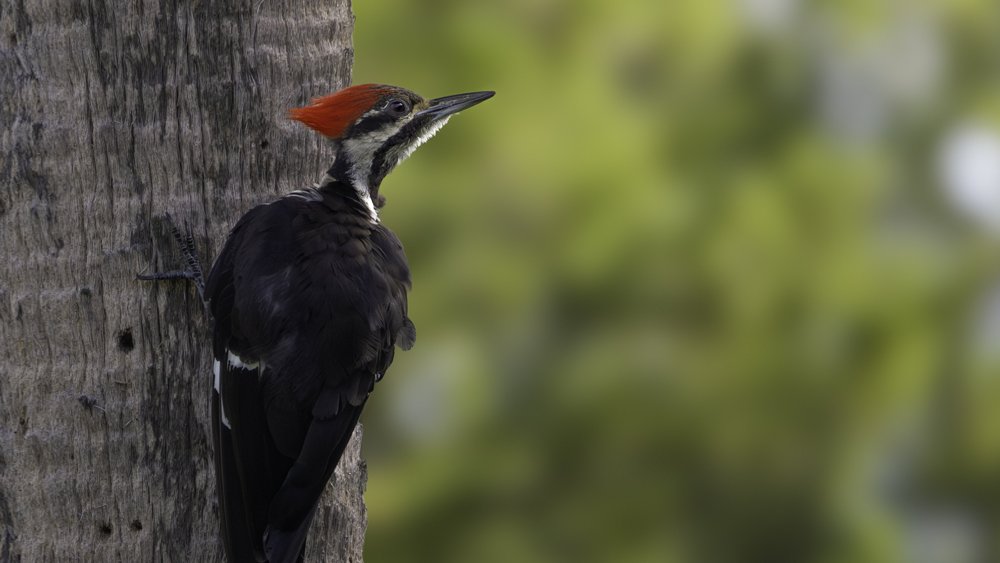
Photo Credit: Stefan Marinak
Pileated Woodpecker
The Pileated Woodpecker is one of the largest woodpeckers in North America and a striking presence usually found in Cedar Lakes’ wooded areas and the palm trees near the lakes at the entrance of the park. With its black body, bold white stripes, and bright red crest, it’s hard to miss when it lands or drums on a tree. Pileated Woodpeckers favor mature forests near water, making the park a perfect habitat to live in.
“Portrait of a male Prairie Warbler busy acourtin'” by Andy Reago & Chrissy McClarren, CC BY 2.0
Prairie Warbler
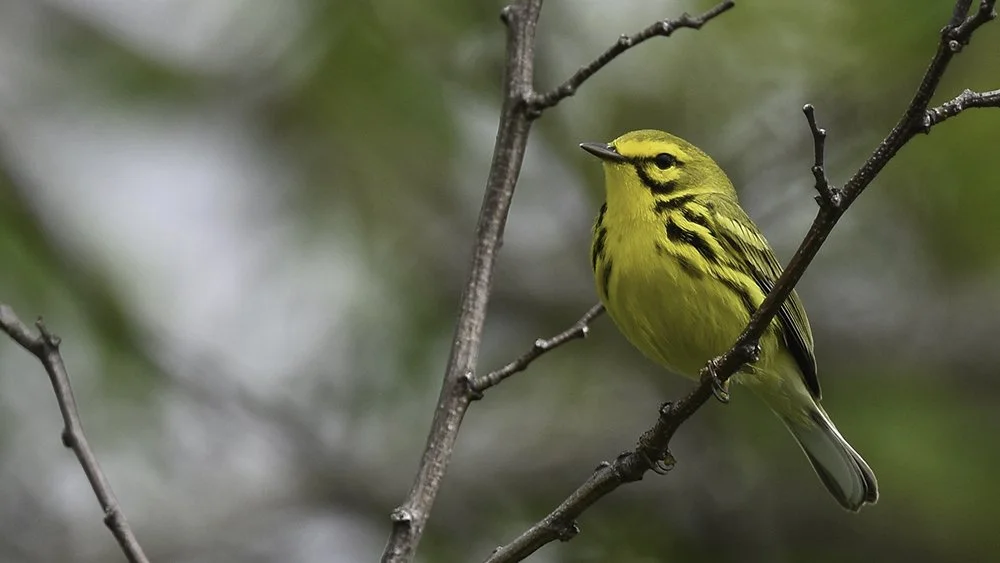
The Prairie Warbler is a tiny, bright yellow songbird often seen darting through bushes or the tree canopy at Cedar Lakes. Males are especially striking, with dark streaks along their sides, a dark semicircle under the eye, and a small chestnut patch on the back of the neck, while females and immature birds are duller in color. These energetic warblers feed on insects, spiders, and occasionally fruit, hopping quickly from branch to branch as they search for food.
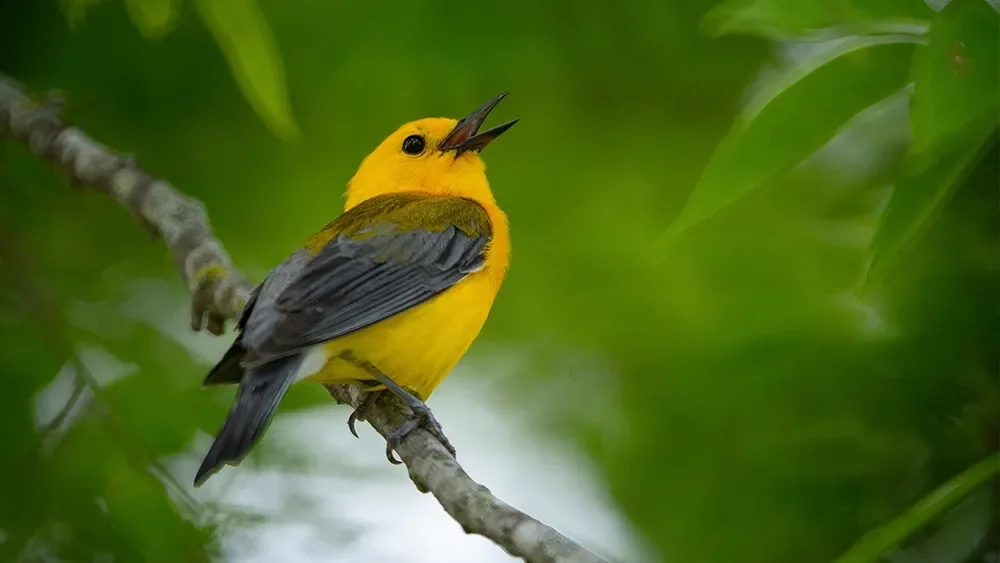
“Protonotaria citrea - Prothonotary Warbler - Oklahoma” by Thomas Shahan, CC BY 2.0
Prothonotary Warbler
The Prothonotary Warbler is a brilliant flash of golden-yellow in Florida’s swamps and wetlands. At the gardens, they favor the wooded areas near ponds and standing water, where they forage along low branches and tree trunks. These striking birds are unusual among warblers because they nest in tree cavities and will even use nest boxes, making them a favorite for bird enthusiasts. They are regularly seen in Florida during the spring and fall migration.
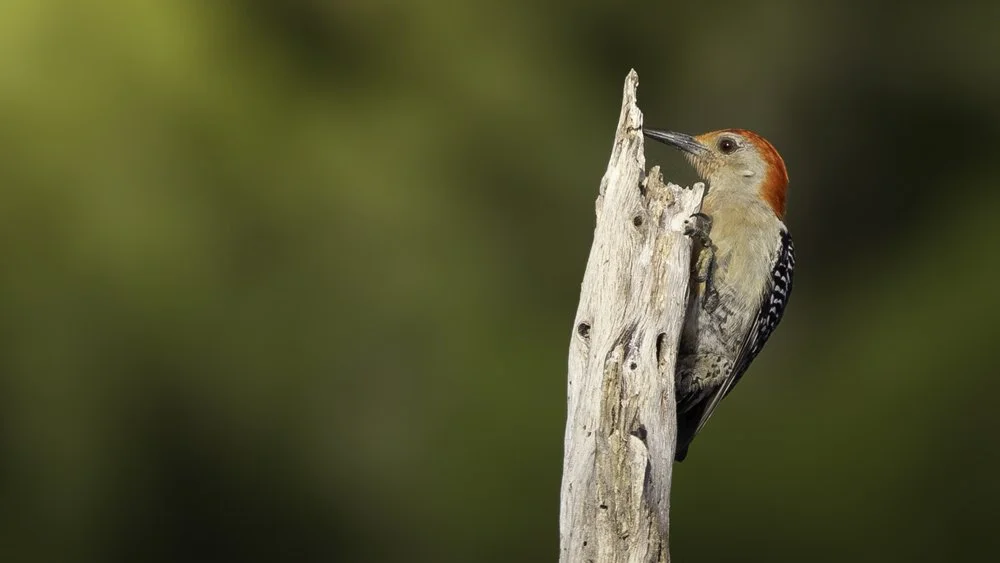
Photo Credit: Stefan Marinak
Red-Bellied Woodpecker
The Red-bellied Woodpecker is a common and colorful presence at Cedar Lakes, often seen in the wooded areas or hopping trees near the lakes at the main entrance of the park. With a bright red cap and nape and a pale reddish-orange belly, it’s easy to distinguish from other woodpeckers. These omnivorous birds feed on fruits, nuts, seeds, and insects, often excavating dead trees and branches for food or nesting. Their drumming calls and bold foraging make them a familiar sight throughout Florida’s open woods.
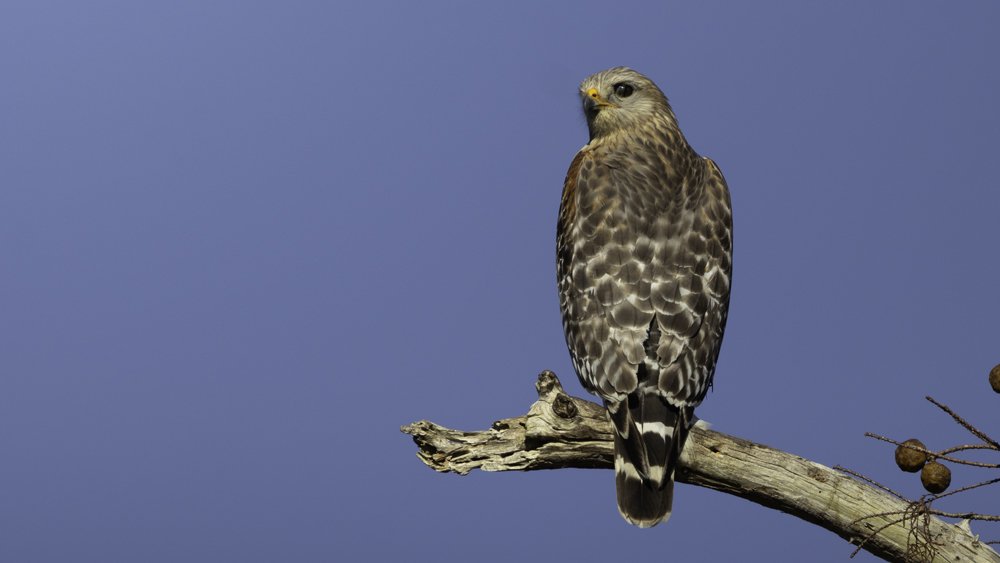
Photo Credit: Stefan Marinak
Red Shouldered Hawk
The Red-shouldered Hawk is a medium-sized raptor often spotted high in the tree canopy or soaring overhead at Cedar Lakes. Adults show reddish-brown barring on the chest, a black-and-white banded tail, and pale wing patches that are visible in flight. Their distinctive, loud “kee-aah” call carries through the park as they hunt for rodents, snakes, and frogs. These forest-loving hawks are common year-round in Florida and add a dramatic presence to the gardens’ wooded areas.
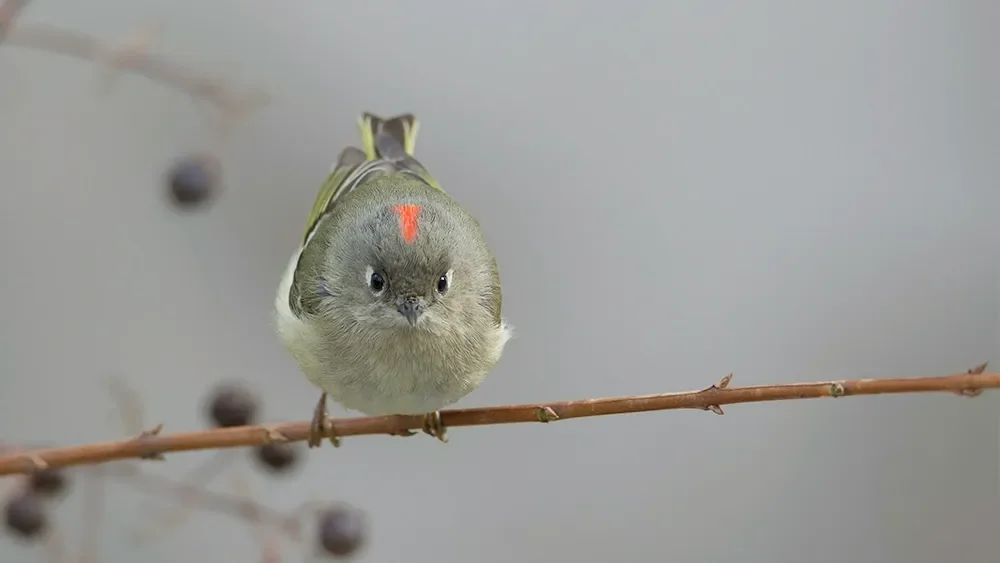
Photo Credit: Vijayalakshmi Nidugondi
Ruby Crowned Kinglet
The Ruby-crowned Kinglet is a tiny, energetic bird that migrates to Florida in the fall. At Cedar Lakes, they can be seen flitting through trees and bushes, often moving with mixed flocks of other small birds. Gray-green in color with two white wing bars and a broken white eye-ring, these little birds are constantly flicking their wings as they hunt for insects, spiders, and occasionally berries. Adult males sport a bright red crown patch, usually hidden but occasionally visible during displays.
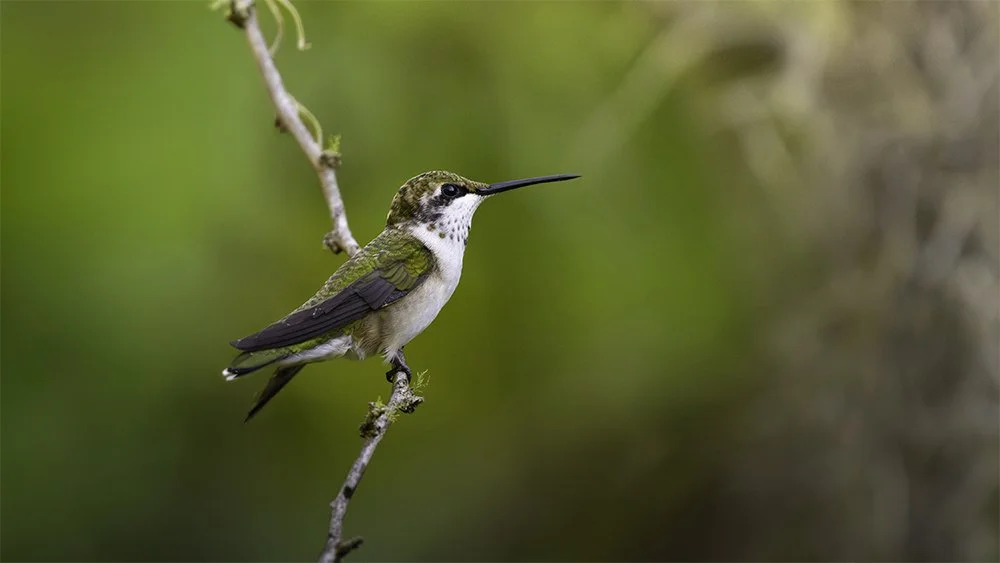
Photo Credit: Stefan Marinak
Ruby Throated Hummingbird
The Ruby-throated Hummingbird is a somewhat challenging bird to spot at Cedar Lakes, due to their small size. Our gardens are one of the best places in Central Florida to spot them thanks to our abundance of nectar-rich plants. Males are instantly recognizable by their iridescent red throats, metallic green backs, and tiny size, about 3 inches long and weighing as little as a penny. Females and juveniles are slightly duller, with green backs and white-tipped tail feathers. These energetic birds dart from flower to flower and feed almost constantly on nectar and small insects to fuel their high-speed activity.
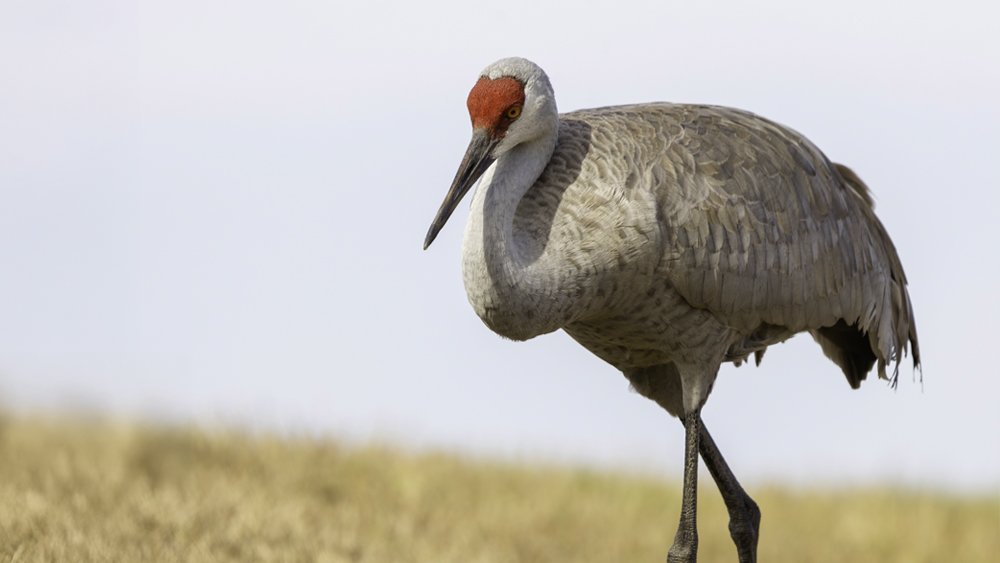
Photo Credit: Stefan Marinak
Sandhill Crane
The Sandhill Crane is a tall, heron-like bird easily recognized by its bright red head and unmistakable, loud, rattling call. At Cedar Lakes, they can sometimes be spotted near the ponds in the conservation area or in the cow pasture near the visitor parking lot. These impressive birds are mostly non-migratory in Florida, and their striking presence, along with their distinctive calls, makes them one of the most memorable sights and sounds in the park.
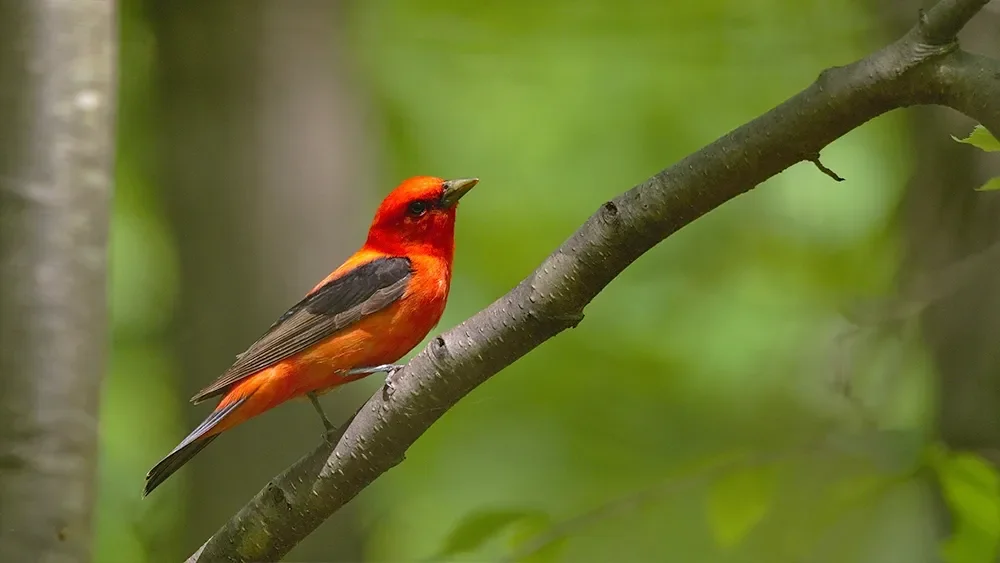
Photo Credit: Stefan Marinak
Scarlet Tanager
The Scarlet Tanager is one of the most colorful songbirds you might spot in Florida, if you’re lucky! Males are a brilliant red with black wings, while females are bright yellow-green, making them stand out among the trees. These birds aren’t year-round residents here but are most often seen during spring and fall migration. Look for them in our wooded areas as they stop to rest and refuel.
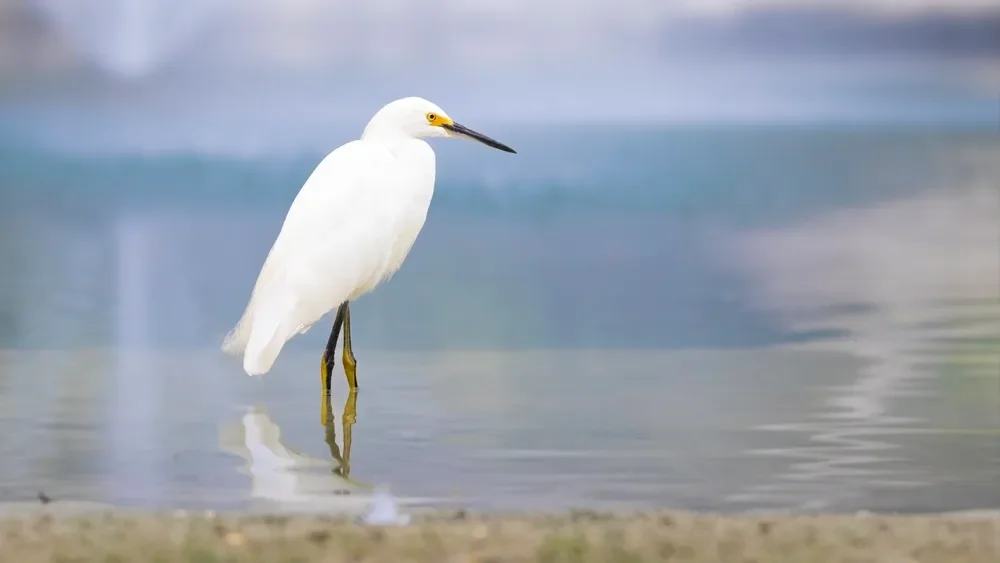
Photo Credit: Stefan Marinak
Snowy Egret
The Snowy Egret is a striking all-white heron with black bills, black legs, and bright yellow feet. At Cedar Lakes, they’ve been spotted at the central pond and in the lakes near the front entrance, though they are more commonly found along Florida’s coast. These active hunters wade through shallow waters, using their feet to stir up prey and catching fish, frogs, and other small aquatic animals with quick, precise strikes.
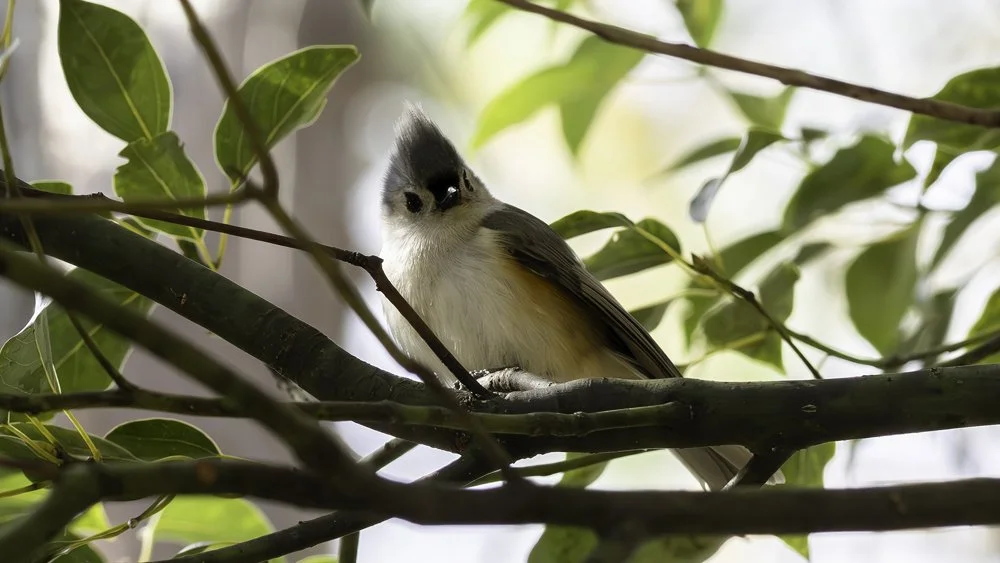
Photo Credit: Stefan Marinak
Tufted Titmouse
The Tufted Titmouse is a small, energetic bird often seen at Cedar Lakes’ bird house field, darting among branches or visiting feeders for sunflower seeds and peanuts. Recognizable by their wispy crest, soft gray upperparts, pale underparts, and large dark eyes, titmice are acrobatic foragers with a distinctive “peter-peter-peter” whistling call. They are year-round residents, common throughout Florida’s woodlands, parks, and residential areas with large trees.
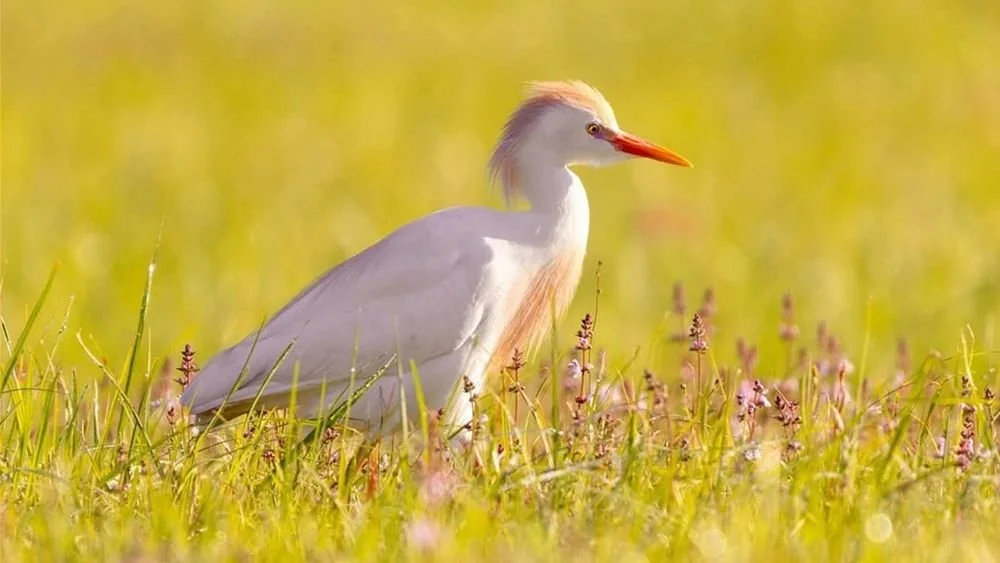
Photo Credit: Stefan Marinak
Western Cattle Egret
The Western Cattle Egret is a stocky, mostly white heron often seen here following cows in the pasture or perched in the tall trees near the lakes. These birds are about half the size of a Great Egret, and have a short, thick neck and forage for insects stirred up by large animals. During breeding season, adults display orange-buff plumes on the head, back, and breast, with bright red bills and legs, while non-breeding adults and juveniles have yellow or dark bills and legs.
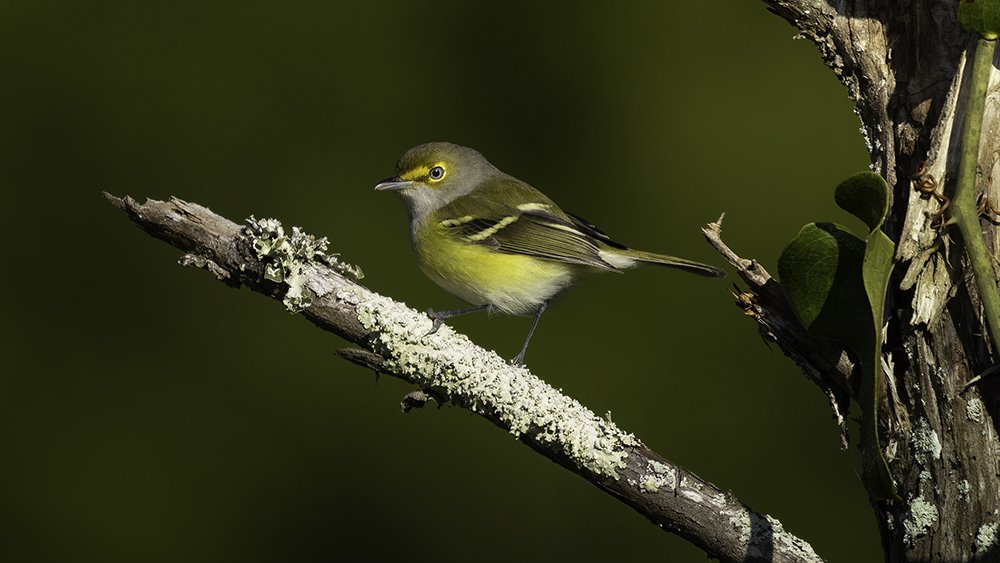
Photo credit: Stefan Marinak
White Eyed Vireo
The White-eyed Vireo is a small, secretive bird that can be tough to spot at Cedar Lakes, since it prefers the dense woods and thick undergrowth. Look for its bright white eyes, yellow “spectacles,” green back, and yellow sides, often glimpsed briefly as it hops through shrubs and heavy cover. These energetic birds are more often heard than seen, using sharp, buzzy calls to communicate while they forage in the park’s wooded areas.
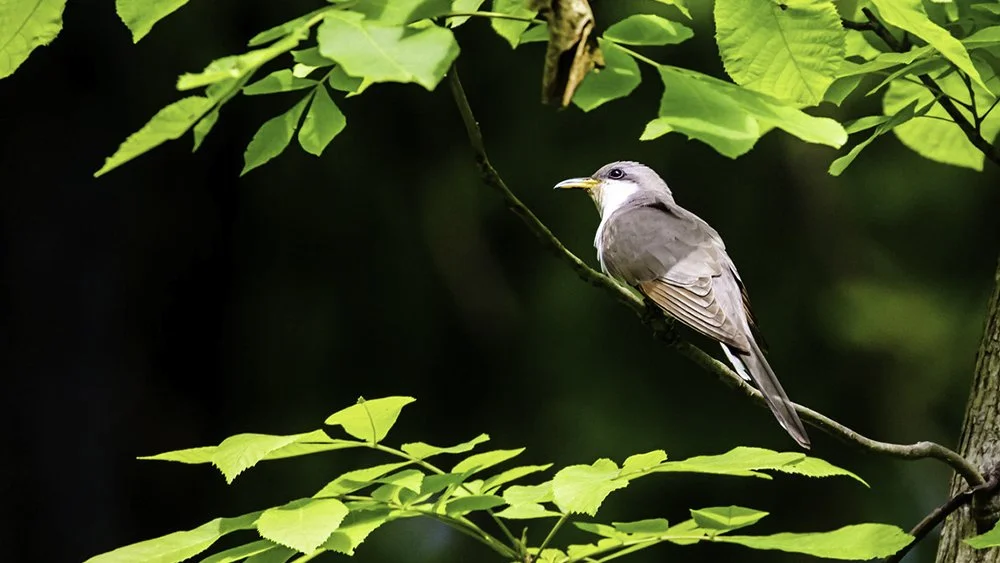
Photo Credit: Melissa McMasters
Yellow Billed Cuckoo
The Yellow-billed Cuckoo is a secretive bird that breeds in Florida from late May through as late as September and is more commonly spotted during spring and fall migration. At Cedar Lakes, they can sometimes be heard or glimpsed in dense trees and shrubs, though their quiet, elusive nature makes them hard to spot. Recognizable by their long tail and slender body, these cuckoos time their nesting to take advantage of abundant caterpillars, beetles, and cicadas.
Tips for Birding in Central Florida During Fall
Fall is a fantastic time to go birding in the gardens and throughout Central Florida. Here are a few helpful tips to make the most of your visit:
Arrive Early: Plan your visit as close as possible to sunrise. This is when birds are most active, the lighting is ideal for photography, and temperatures are cooler.
Bring the Right Gear: Binoculars are a must, and if you're into bird photography, a long lens will help you capture those shy or high-perched species.
Move Slowly and Quietly: A calm, quiet approach will help you avoid startling the birds and increase your chances of close encounters.
Check the eBird App: Log your sightings and check for recent bird activity in the area. It’s a great tool for discovering what others have spotted.
Plan Your Visit
Whether you're a casual bird watcher or a seasoned bird photographer, this is a great time of year to explore the gardens and spot a wide variety of bird species. Bring your binoculars, camera, and the eBird app, you never know what species you’ll find tucked among the trees or perched near the water!
Plan your visit to Cedar Lakes Woods and Gardens and discover why it’s a hidden gem for Central Florida birders.
