Reptiles
The 110-acre property at Cedar Lakes provides a unique topographical landscape for Florida’s native reptiles. Our reclaimed limestone quarry, with its vertical rock faces and sun-drenched ledges, serves as a natural thermal sanctuary. These "living fossils" are supported by a pristine aquatic ecosystem, fed directly by the Floridan Aquifer, and protected upland hammocks that offer a safe haven for both terrestrial and semi-aquatic species.
Turtles & Tortoises
These shade-loving plants thrive in the moist pockets of the quarry and provide an incredibly lush ground cover.
Florida Red-bellied Cooter (Pseudemys nelsoni): Recognizable by the reddish tint on their under-shells, these are the primary sun-bathers of the quarry. They can frequently be seen stacked on logs and limestone outcroppings during the warmest parts of the day.
Florida Softshell Turtle (Apalone ferox): A fascinating sight with a leathery, pancake-like shell and a long, snorkel-like snout. They are exceptionally fast swimmers, often found patrolling the bottoms of the quarries.
Gopher Tortoise (Gopherus polyphemus): A state-protected "keystone species." These land-dwelling tortoises are a Florida treasure. Their deep burrows provide critical shelter for hundreds of other local species, earning them the title of the "architects" of the Florida scrub.
Peninsula Cooter (Pseudemys peninsularis): These large, impressive turtles are masters of the water. Look for the fine yellow "pinstripes" on their heads as they glide through the clear depths of the ponds.
Suwannee Cooter (Pseudemys concinna suwanniensis): The largest of the "hard-shelled" turtles in our region. Named for the nearby Suwannee River, these turtles are specialized for flowing water and spring-runs. They are a state-protected species and look very similar to the Peninsula Cooter but grow significantly larger—sometimes reaching 17 inches.
Lizards
From the canopy of our oaks to the crevices of our limestone walls, these agile climbers are the most visible "residents" of the garden's vertical world.
Green Anole (Anolis carolinensis): Florida’s only native anole. Watch for these vibrant emerald-green lizards among the ferns; they are masters of camouflage, capable of shifting to deep brown to match the surrounding bark and rock.
Broad-headed Skink (Plestiodon laticeps): These large, sleek lizards are expert climbers of our older trees. During the spring breeding season, the males are easily identified by their brilliant orange heads.
Six-lined Raceunner (Aspidoscelis sexlineata): Look for these high-speed lizards in the sunnier, drier areas of our nature trails. They are distinguished by six light-colored longitudinal stripes and their incredible "sprint" speed when startled.
Brown Anole (Anolis sagrei): An naturalized species often found on the lower stone ledges. While similar to the Green Anole, they are sturdier and feature intricate diamond or ridge patterns along their backs.
Snakes
Our non-venomous snake population provides an essential ecological service, acting as a natural pest control system for the 110-acre estate.
Eastern Coral Snake (Micrurus fulvius): A beautiful but reclusive resident of our wooded hammocks. Characterized by its brilliant red, yellow, and black bands, the Coral Snake is a shy, ground-dwelling species that spends most of its time under leaf litter. While venomous, they are non-aggressive and play a vital role in our ecosystem. Remember: "Red touch yellow, kill a fellow."
Eastern Garter Snake (Thamnophis sirtalis sirtalis): Often spotted in the moist leaf litter near our waterfalls and ponds, these small, striped snakes are well-adapted to the damp micro-climates of the quarry floor.
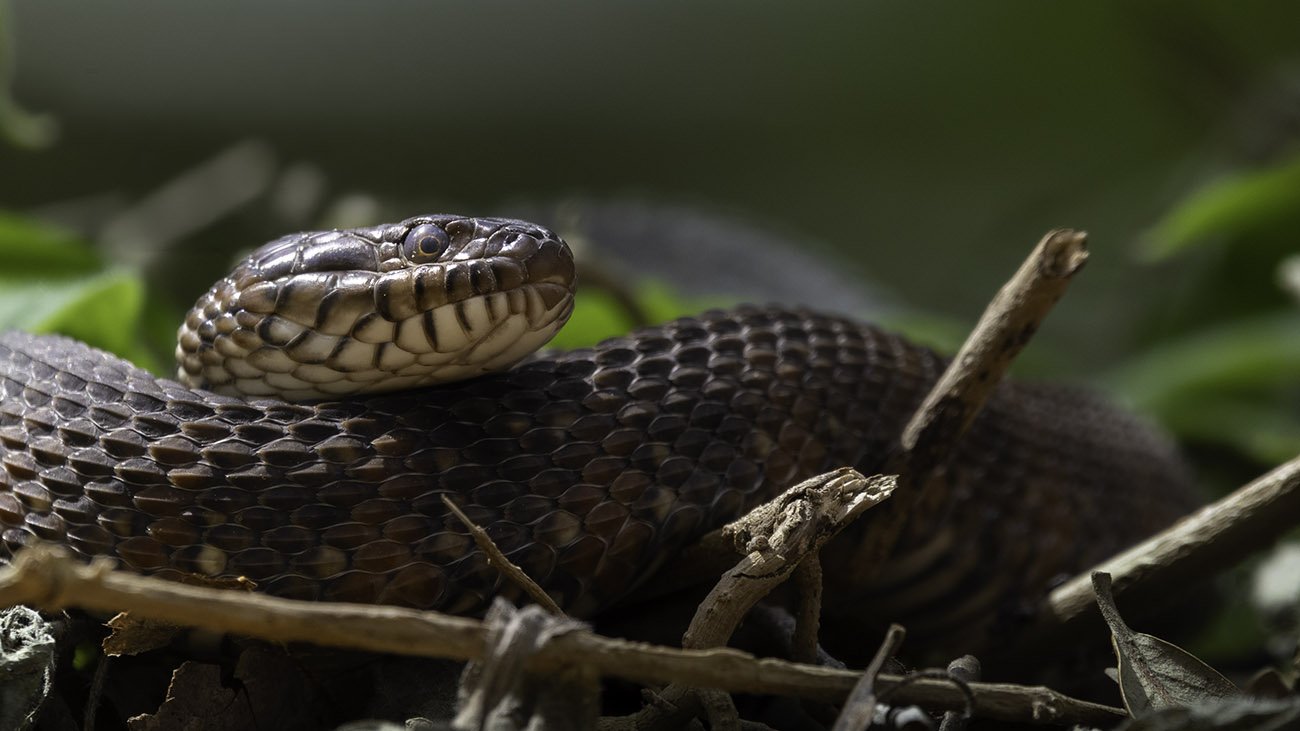
Florida Banded Water Snake (Nerodia fasciata pictiventris): Frequently seen near the water's edge, these heavy-bodied snakes are often mistaken for cottonmouths but are harmless fish and frog hunters that thrive in our aquifer-fed lakes.
Scarlet Kingsnake (Lampropeltis elapsoides): Often mistaken for the Coral Snake, this stunning "mimic" is a harmless and beneficial resident of the gardens. The Scarlet Kingsnake uses its vibrant colors to trick predators into thinking it is dangerous. You can distinguish them by the order of their bands: the red touches the black. Remember: "Red touch black, friend of Jack."
Southern Black Racer (Coluber constrictor priapus): A sleek, matte-black snake and a beneficial neighbor. These agile residents move with incredible speed and are vital for maintaining the balance of rodent and insect populations.
Yellow Rat Snake (Pantherophis alleghaniensis): An impressive, gold-tinted climber often found in the rafters of old structures or high in the trees. They are docile "constrictors" that specialize in keeping the garden's small mammal population in check.
Exotic Residents and Rescues
While Cedar Lakes Woods and Gardens is a primary sanctuary for Florida’s native reptiles, we also provide a permanent, specialized home for select non-native species. These "ambassador animals" often come to us as rescues or through conservation placement, requiring a lifetime commitment and expert care.
African Spurred Tortoise (Sulcata) (Centrochelys sulcata): A crowd favorite and a true giant of the tortoise world. While not native to Florida, we provide specialized care for our resident Sulcata, “Spur”. As the third-largest tortoise species in the world, they are famous for their impressive size, "spurred" hind legs, and long lifespans.