Cacti and Succulents
Step out of the humid Florida canopy and into the arid environment of our dedicated Cacti and Succulents Greenhouse at Cedar Lakes Woods and Gardens. This specialized, climate-controlled space allows us to cultivate incredible desert flora from across the globe, from striking, spherical cacti heavily armed with spines to vibrant, fleshy succulents that burst with seasonal color.
Cacti (The Desert Spikes)
These are the true cacti, known for their striking geometric shapes and specialized spines.
Balloon Cactus (Parodia magnifica): A beautifully ribbed, bluish-green spherical cactus that produces stunning, pale yellow flowers at its crown.
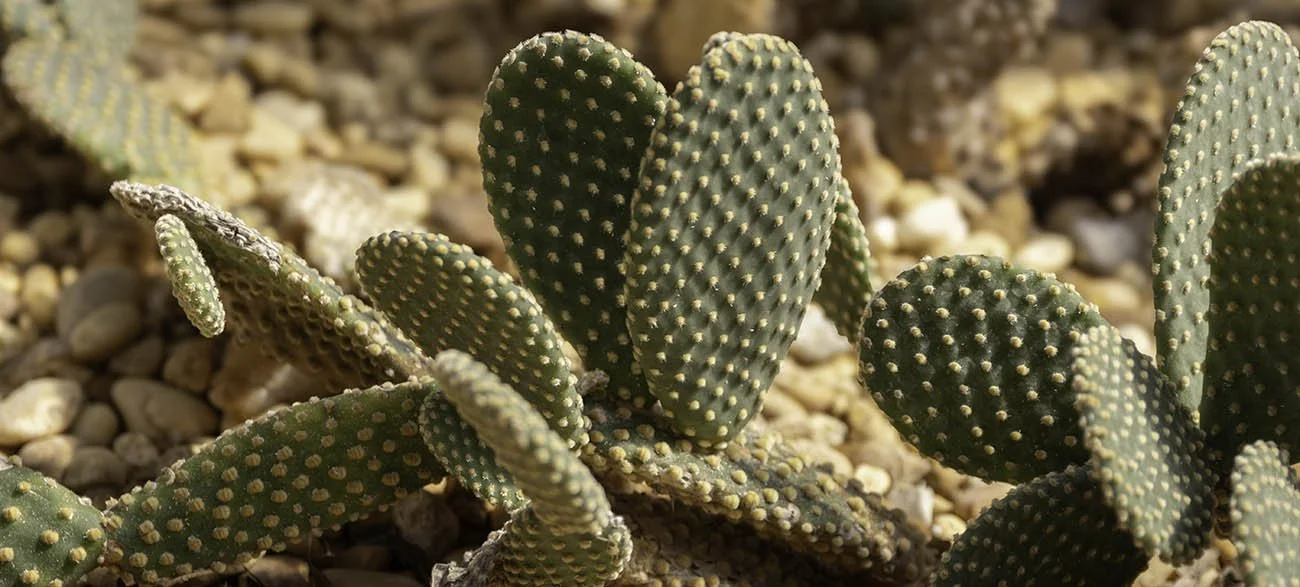
Bunny Ears Cactus (Opuntia microdasys): A highly recognizable species featuring flat, branching pads that resemble rabbit ears. Instead of long spines, it is covered in fuzzy-looking (but highly prickly!) clusters of tiny bristles called glochids.
Golden Barrel Cactus (Echinocactus grusonii): A heavily armed, globe-shaped standout that provides incredible texture with its bright, golden-yellow spines.
Indian Comb (Pilosocereus leucocephalus): A striking, tree-like cactus known for the dense, white "hair" that grows along its ribbed, blue-green stems. This wooly coating helps protect the plant from intense sun and frost, giving it a fuzzy, aged appearance.
Key Tree Cactus (Pilosocereus robinii): A rare and majestic Florida native that grows into a multi-branched, tree-like form. This endangered species is known for its beautiful blue-green stems and delicate, bell-shaped flowers that bloom in the evening.
Night-Blooming Cereus (Selenicereus undatus): A legendary, sprawling cactus known for its dramatic, large white flowers that open for only one night a year. These "Queen of the Night" blooms are intensely fragrant and can reach the size of a dinner plate.
Organ Pipe Cactus (Stenocereus thurberi): A multi-stemmed cactus that branches from the base to create a majestic, upright silhouette. It is known for its slow growth and impressive longevity and produces nocturnal, pinkish-white flowers that bloom in the late spring, followed by sweet, red fruit that was traditionally harvested by indigenous peoples.
Succulents (The Fleshy Flora)
This section covers the broader group of water-retaining plants that rely on their thick, fleshy leaves to survive dry conditions.
Crown of Thorns (Euphorbia milii): A rugged, woody succulent that defies the Florida heat with its fleshy, thorn-covered stems and delicate, colorful bracts. Unlike true cacti, this Euphorbia produces small, bright "flowers" (modified leaves) almost year-round.
Florist Kalanchoe (Kalanchoe blossfeldiana): A resilient, glossy-leaved succulent that rewards visitors with dense, long-lasting clusters of brightly colored blooms.
Large-Scale & Landscape Succulents
This section covers the broader group of water-retaining plants that rely on their thick, fleshy leaves to survive dry conditions.
American Century Plant (Agave americana): A massive, architectural marvel that commands attention with its thick, blue-green leaves and sharp terminal spines. Named for the mistaken belief that it only blooms every 100 years, it actually spends 10 to 25 years storing energy before sending up a single, towering flower stalk that can reach over 20 feet in height