Arthropods
Arthropods are the unseen engineers of Cedar Lakes Woods and Gardens. This vast group, including insects and arachnids, performs the essential "behind-the-scenes" labor that keeps our 110-acre ecosystem thriving. Explore everything from the primary pollinators of our botanical collections to the silent hunters that maintain the balance of our ecosystem.
Pollinators and Night Flyers
These are the most celebrated arthropods in the garden, responsible for the vibrant blooms and seed production throughout the estate.
Cloudless Sulphur (Phoebis sennae): Often seen as a bright "flutter of yellow" against the green foliage, these butterflies are a constant presence in the sunnier sections of the quarry.
Common Eastern Bumblebee (Bombus pensylvanicus): The "heavy lifters" of the sanctuary. These large, charismatic bees are capable of flying in cooler temperatures and lower light than most other bees, making them the first and last pollinators you’ll see each day in the quarry.
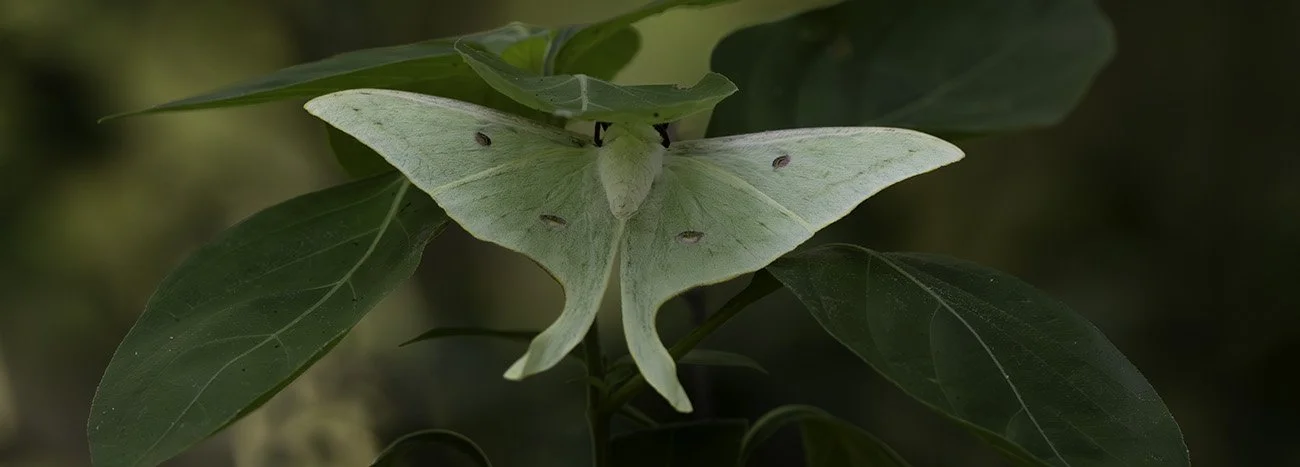
Luna Moth (Actias luna): Often referred to as the "Ghost Moth," the Luna Moth is one of our most breathtaking nocturnal residents. With a wingspan that can reach nearly five inches, they are easily recognized by their luminous, sea-foam green wings and long, elegant "swallowtails."
Monarch Butterfly (Plextippus): A seasonal highlight of our open "garden rooms." We prioritize the planting of native milkweed to support their epic migrations and provide a safe haven for their larvae.
Southeast Blueberry Bee (Habropoda laboriosa): A true Florida specialist. These fuzzy, bumblebee-sized powerhouses are essential for the pollination of our native blueberries and Sparkleberry trees. They use "buzz pollination," vibrating their flight muscles at a specific frequency to release pollen that other bees simply cannot reach.
Zebra Longwing (Heliconius charitonia): Florida’s State Butterfly. These striking, black-and-yellow striped butterflies thrive in our shaded hammocks and are frequent visitors to our passionflower vines.
Architects & Hunters
These predators act as a natural, chemical-free defense system, keeping the garden's insect populations in check.
Green Lynx Spider (Peucetia viridans): A vibrant, neon-green hunter often found perfectly camouflaged on our flowering shrubs, waiting for garden pests.
Golden Silk Orb-weaver (Trichonephila clavipes): Often called "Banana Spiders," these large, docile weavers create massive, golden-hued webs in the canopy. They are master architects and highly effective at catching larger flying pests.
Pantropical Huntsman Spider (Heteropoda venatoria): A striking and large-bodied resident often found in the darker, cooler crevices of our limestone structures and rocky outcroppings. While their size can be intimidating, Huntsman spiders are harmless to humans and are prized as "natural exterminators." They are nocturnal hunters that feast on cockroaches and other large insects.
Rabid Wolf Spider (Rabidosa rabida): One of Florida's largest and most visible wolf spiders. Despite their alarming name, they are harmless to humans and are named for their erratic, high-speed "rabid" running style when chasing prey. You can often spot them in the leaf litter of our hardwood hammocks or near the edges of our nature trails.
Ground-Dwellers & Decomposers
These species work on the quarry floor, recycling nutrients and enriching the soil for our botanical collections.
Giant Millipede (Narceus americanus): A peaceful "recycler" often found under the leaf litter of our hardwood hammocks. They play a critical role in breaking down organic matter into nutrient-rich soil.
Florida Woods Roach (Eurycotis floridana): Often called a "Palmetto Bug," these are native forest-dwelling insects that live outdoors in decaying logs. They are essential decomposers and a primary food source for our resident owls and birds.
Musicians
Defined by their powerful hind legs and "musical" abilities, these insects are the primary herbivores of our meadow and canopy edges.
American Bird Grasshopper (Schistocerca americana): Unlike the Lubber, these are powerful fliers. Often seen jumping from the tall grasses along our nature trails.
Eastern Lubber Grasshopper (Romalea microptera): A true Florida icon. These large, flightless grasshoppers are strikingly colored in yellow, orange, and black, which serves a warning to predators that they are chemically defended. While they move slowly through our garden beds, they play a massive role in the local food web.
Giant Florida Katydid (Stilpnochlora couloniana): One of our most impressive "hidden" residents. As the largest katydid in North America, they are masters of mimicry, with wings that perfectly replicate the veins and texture of a bright green leaf. You are more likely to hear their rhythmic "ticking" from the high canopy of our oaks than to see them.