Amphibians
Amphibians are the biological "sentinels" of an ecosystem. Because of their permeable skin, they are highly sensitive to environmental changes, making their thriving population at Cedar Lakes a testament to our pristine, aquifer-fed water and chemical-free gardening practices. From the shaded limestone grottos to natural wooded ponds, our 110-acre sanctuary provides the high-humidity micro-climates these specialized vertebrates require.
Frogs & Toads
The "voice of the gardens," these vocal residents provide a natural symphony that changes with the seasons and the setting sun.
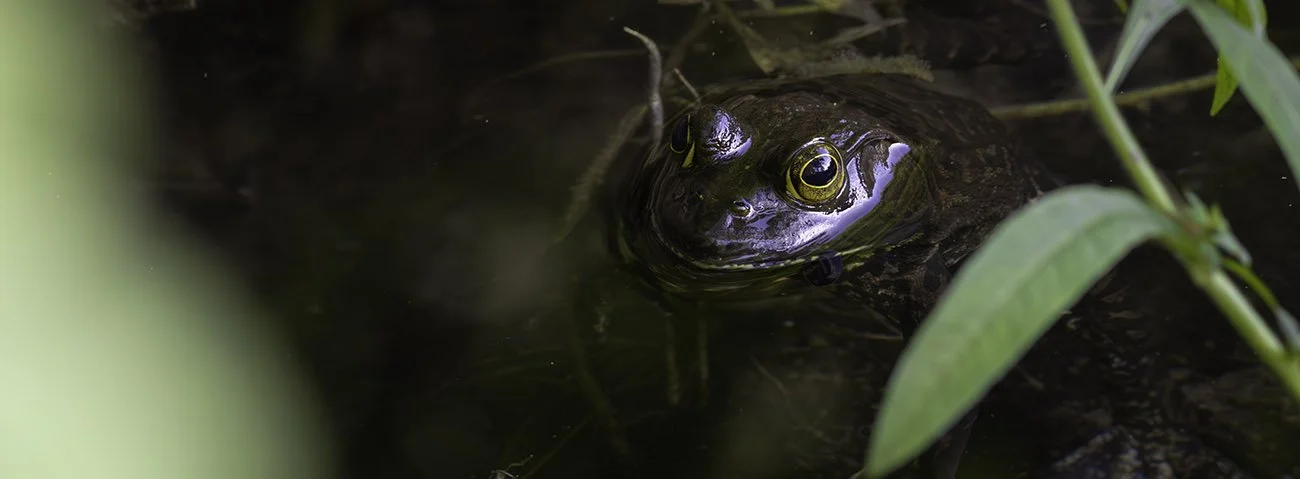
American Bullfrog (Lithobates catesbeianus): The heavyweight of the quarry. These large, green-to-brown frogs are masters of the water's edge. You’ll often hear their deep, vibrant "jug-o-rum" call echoing off the limestone walls during the summer months.
Barking Treefrog (Dryophytes gratiosus): Florida’s largest treefrog, known for its distinctive "tonk-tonk" call that sounds remarkably like a distant barking dog. They prefer the higher canopy of our oaks and cedars but return to the ponds to breed.
Green Treefrog (Dryophytes cinereus): A vibrant, slender resident often found clinging to the undersides of large leaves or near the garden's water features. They are easily identified by the bright white or yellow stripe running along their sides.
Southern Toad (Anaxyrus terrestris): Our primary "terrestrial" amphibian. These bumpy-skinned insectivores are most active at night, patrolling the garden paths and mulch beds for pests. They are a vital part of our natural, chemical-free pest control team.
Salamanders & Newts
While more secretive than our vocal frogs, these "hidden" residents represent the ancient, cool-climate lineages that thrive in our shaded limestone crevices.
Peninsula Newt (Notophthalmus viridescens piaropicola): A fascinating species that spends part of its life on land as a "red eft" before returning to the aquifer-fed ponds as an aquatic adult. Look for them moving slowly through the submerged vegetation in the lower lakes.
Slimy Salamander (Plethodon grobmani): Found in the damp, dark recesses of the quarry's rock faces and under fallen logs. They are named for the sticky secretion they use to deter predators—a perfect example of the specialized defenses found in the garden’s "hidden" world.